
Cruise Tips

First Time Cruise Tips: 5 Things Nobody Tells You

By John Payne  ·  May 26, 2026

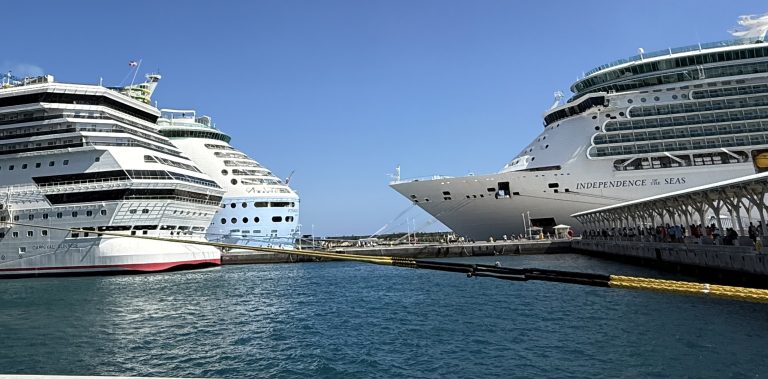
Two cruise ships docked at port with passengers on the pier, first time cruise tips from Barefoot Vacation Travel

First Time Cruise Tips: 5 Things Nobody Tells You

There is a moment that happens on almost every first cruise. You are standing at the port, looking up at the ship for the first time, and it hits you that the thing you booked is somehow even bigger than you expected. The photos did not prepare you for it. Nothing really does.
That moment is usually followed by a second one: the quiet realization that you have no idea what you are about to walk into.

That moment is usually followed by a second one: the quiet realization that you have no idea what you are about to walk into.

Cruising has a learning curve that nobody warns you about. Not because the cruise lines are hiding anything, but because the people who know it best tend to forget what it was like not to know it. After 30 sailings across multiple lines, ship classes, and itineraries, our team has watched enough first-timers navigate their way through that learning curve to know exactly where the surprises tend to hit.

These are the five things we wish someone had told us before our first sailing.

The ship does not wait for you.

This one sounds like common sense until someone you know misses their ship in port and suddenly it is extremely real.

Every cruise itinerary lists a port departure time. That time is not a suggestion, and it is not the time the gangway closes. The gangway typically closes 30 to 45 minutes before the published departure time. The ship will leave. It will not wait for you because your shore excursion ran long, your taxi was stuck in traffic, or you lost track of time at a beach bar.

What nobody tells you is that this applies even if you booked a cruise line excursion. Cruise line excursions are supposed to be protected, meaning the ship should wait if the tour bus is running late. That is generally true, but it is not a guarantee, and independent excursions carry no such protection at all.

The practical advice: set your phone alarm for one hour before the ship’s published departure time every single day in port. Keep that alarm. It will feel excessive until the day it is not.

The onboard account will surprise you if you are not paying attention.

Most first-time cruisers budget for their cruise fare, their flights, and maybe a shore excursion or two. What catches people off guard is the onboard spending.

The ship itself runs on a cashless system. You swipe a card or use your cruise line app for everything: specialty dining, drinks, spa treatments, casino, Wi-Fi, gratuities, and anything else you want beyond what is included in your base fare. At the end of the sailing, it all comes due at once.

Depending on what you booked and what line you are sailing, gratuities alone can run $18 to $20 per person per day or more. On a seven-night sailing for two people, that is a $250 line item before you have spent a dollar on anything else.

This is not a complaint about how cruise lines work. It is just useful information going in. Know what your fare includes, know what the gratuity policy is on your specific line, and set a rough daily spending number before you board. The travelers who are most frustrated at the end of a cruise are usually the ones who never looked at their account until checkout morning.

Embarkation day is not a half day.

Most cruises board somewhere between 11am and 2pm. Most sailings depart between 4pm and 6pm. That window seems short on paper, but embarkation day has a full rhythm to it, and first-timers often underestimate it.

You will likely wait in a boarding line, even with priority access or an early boarding time. Once on the ship, you will want to explore. Your cabin may not be ready until 1pm or 2pm. The lunch buffet on embarkation day is one of the best meals of the trip in terms of variety, and it is usually packed. The mandatory emergency muster drill happens before departure.

The thing that catches people off guard: the ship leaves port and you are already exhausted.

Give yourself embarkation day. Do not schedule a red-eye flight that lands two hours before boarding. Do not try to squeeze in a half day of tourism on the morning of your departure. Arrive rested, arrive early, and let the day unfold. The sailing has barely started.

Not every cabin category is the same, even within the same label.

You booked a balcony cabin. Congratulations. Now, which balcony cabin?

On most large ships, balcony cabins can vary significantly in actual size, balcony depth, view obstruction, and noise exposure depending on where they sit on the ship. A balcony cabin midship on a higher deck is a different experience from a balcony cabin near the aft engines or directly under the pool deck.

Interior cabins have the same issue. An interior cabin on the sixth deck in the middle of the ship will be quieter and more stable than one near the nightclub or on a deck that sees crew movement overnight.

This is one of the areas where working with a travel advisor pays off most directly, because this kind of detail is not visible in the booking tool. It comes from experience on the ships themselves or from networks of advisors who track it closely.

When you book, ask specifically about the cabin location, not just the cabin category. The category tells you what you are getting. The location tells you what the experience will actually be.

Never Miss a Cruise Tip

Get insider advice, trip inspiration, and honest cruise guidance delivered straight to your inbox. Join the Roaming Barefoot newsletter and let us do the research for you.

The best excursions are not always the ones the cruise line sells you.

The cruise line shore excursion catalog is convenient, and for first-time cruisers who want the simplicity of everything handled in one place, it is a perfectly reasonable choice.

But here is what the catalog does not tell you: the same tour, visiting the same sites, with a smaller group and a local guide, is often available through independent operators for significantly less money and a genuinely better experience.

The tradeoff is responsibility. If you book independently and something goes wrong, the ship is under no obligation to wait. That is the real risk, and it is worth taking seriously.

The practical middle ground that experienced cruisers tend to use: book independent for ports where you are confident in the logistics and the excursion itself is low-stakes. Book through the cruise line for ports that are unfamiliar, high-activity, or where the timing back to the ship is tight.

Your first cruise is not the sailing to stress-test this. Stick with cruise line excursions or well-reviewed independent operators that are experienced working with cruise ship passengers. Ask us before you book anything independently in a port you have never visited. That is exactly the kind of question we are here to help with.

One more thing before you board.

First-time cruisers almost always leave their first sailing thinking the same thing: I wish I had done this sooner. The ship is bigger than you expected. The food is better than you expected. The ports are more manageable than you expected. And the rhythm of a cruise day turns out to be exactly the kind of effortless, handled vacation that most people have been looking for without knowing it.

The learning curve is real. But it is short. And once you know what you are walking into, cruising tends to have a way of becoming something people do more than once.

If you are planning your first cruise and want someone who knows these ships firsthand to help you put it together, that is what we are here for. Reach out at journeys@bvt.travel or fill out our quick inquiry form and we will take it from there.

Kick off your shoes and let us do the work.

Similar Posts

Leave a Reply

Your email address will not be published. Required fields are marked *